
Learning Infrastructure For Personalized Wellness
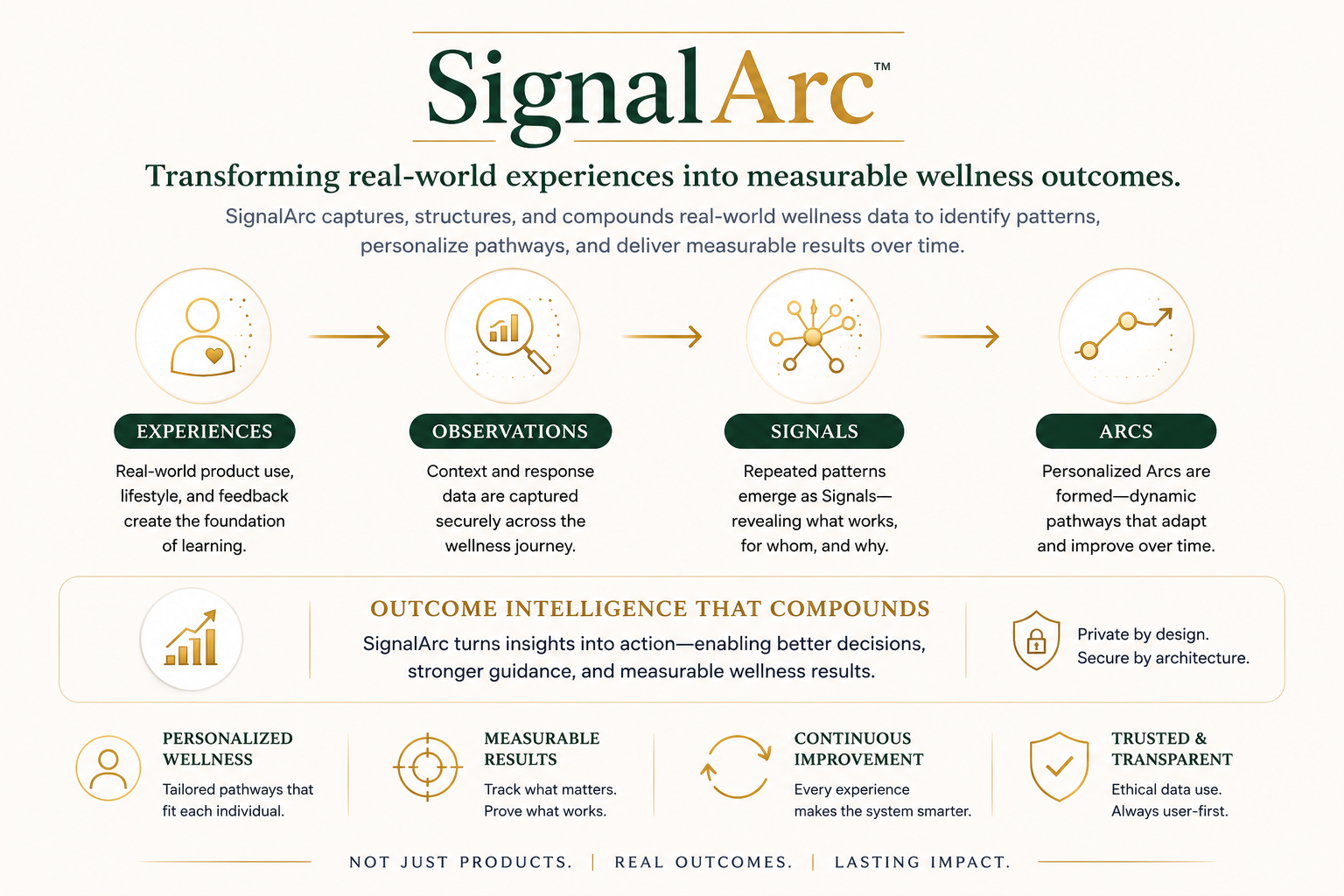
SignalArc helps transform experiences into observations, observations into Signals, and Signals into individualized Arcs.
For CARTA users, that means starting with a goal, confirming what was actually used, logging what changed, and letting repeated patterns guide the next decision.
Most recommendations happen before response is understood
Most wellness recommendations are created before anyone understands how an individual responds. SignalArc was designed to reverse that process.
Rather than starting with assumptions, SignalArc starts with observation. Experiences become data points. Data points become Signals. Signals improve guidance.
Why SignalArc matters
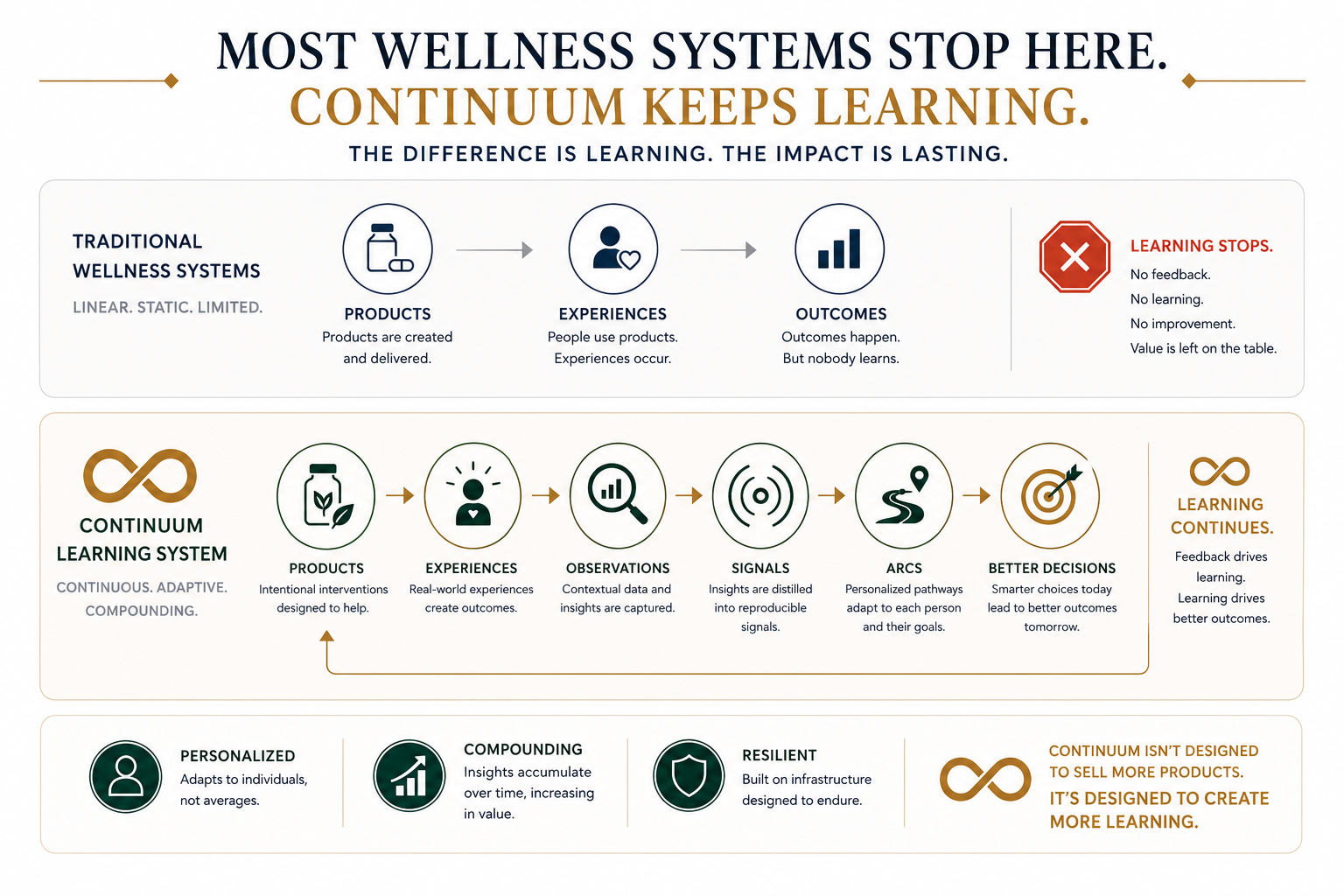
Without observation, experience disappears. Without learning, experiences repeat. Without understanding, personalization never truly occurs.
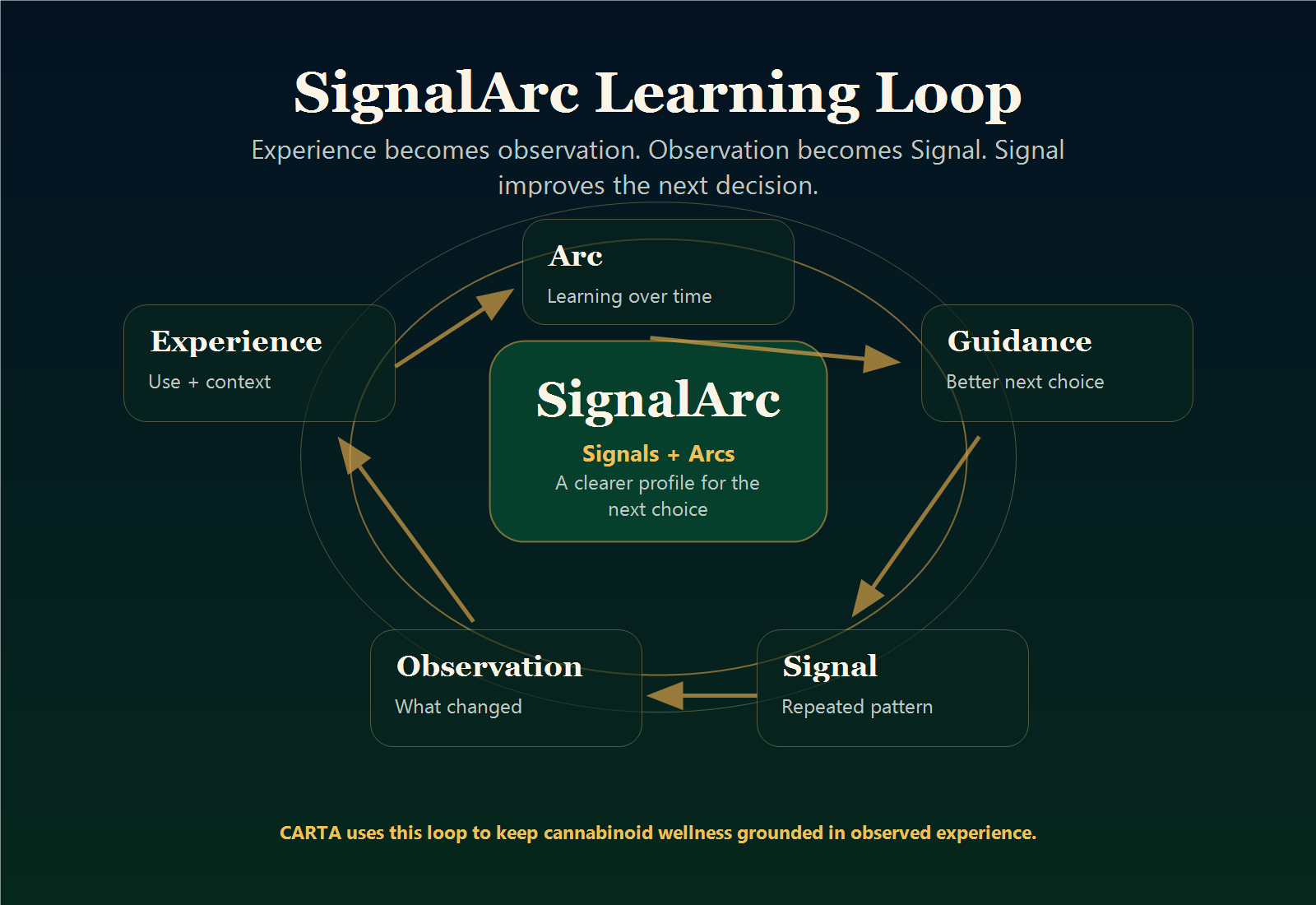
Experience becomes observation. Observation becomes Signal. Signal becomes guidance
Experience
Product use, routine, timing, context, and intent.
Observation
Response, outcome, function, recovery, and perception are captured.
Signal
Repeated patterns become visible across routines and time.
Arc
Personalized pathways begin to form.
Guidance
The next decision becomes more informed than the last.
Every cycle strengthens the system
Repeated observations become Signals. Signals shape individualized Arcs. Arcs improve decisions. Better decisions generate new observations.
The system becomes stronger with every cycle. The goal is not a one-time recommendation. The goal is a pathway that becomes more informed over time.
SignalArc is learning infrastructure
It helps organize experiences, observations, and outcomes into a framework that becomes increasingly useful over time.
SignalArc supports outcome tracking, pathway refinement, product comparisons, cultivar analysis, structured observation, and transparency around why guidance changes.
What SignalArc is not
SignalArc is not a generic tracker, product catalog, strain database, AI chatbot, or recommendation black box. Its purpose is to make learning more transparent and more actionable.
SignalArc also powers cannabis product intelligence
Cultivar Signals is the cannabis-specific app built on the same learning model. It organizes product labels, COAs, batches, chemistry, route, context, session observations, Product Fit, reports, and consent-scoped SignalArc profile push.
For CARTA users, this keeps adult-use product learning connected to the broader pathway without turning SignalArc into a cannabis store, dose calculator, or black-box recommendation tool.
Explore Cultivar Signals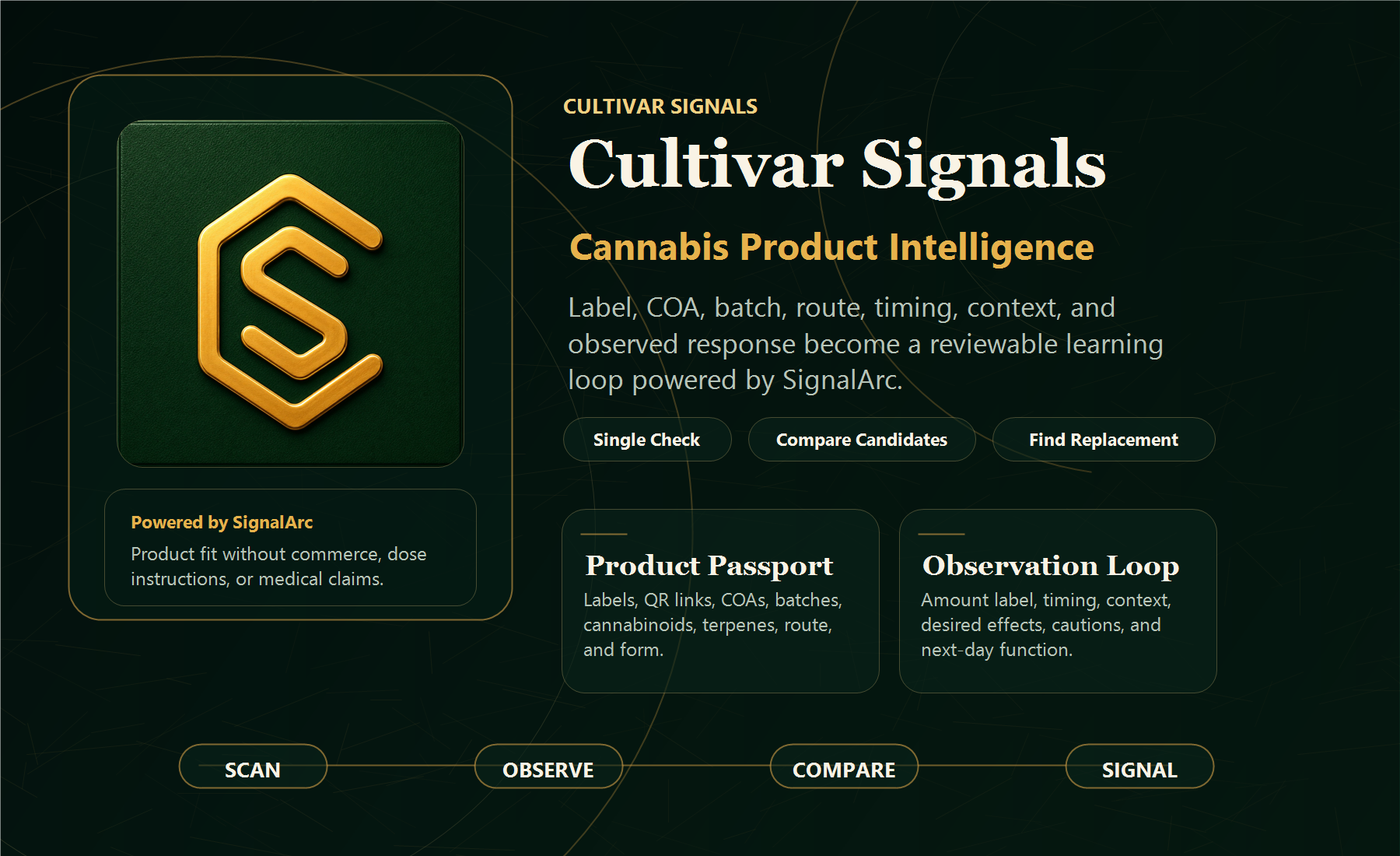
Individual experiences can create shared intelligence
Every participant can contribute observations. No participant sees another participant’s private information.
SignalArc transforms de-identified experience into structured Signals that improve guidance across the network. Learning compounds as participation grows.
Help shape the launch cohort
Early participants can help improve SignalArc by sharing structured observations, outcome feedback, and real-world experience.
The goal is useful learning for the participant and a stronger system for future CARTA pathways.
Request Early AccessNot just a waitlist
The launch cohort is a guided entry point for people willing to start with one goal, use CARTA consistently, and help SignalArc learn from real experience.